I just got done reading the book Red Earth White Lies: Native Americans and the Myth of Scientific Fact written by Vine Deloria Jr. and I can say that it is one of the best books I have read thus far. I can clearly say that I love this book!!!
In my opinion Vine Deloria Jr. in this book has answered many of the questions that I have had about the land we now know as the "Americas." His book to me exposes the ways in which the scientific establishment has found meticulous ways to promote a eurocentric and racist view of the Indigenous people's of the Americas. Furthermore he sheds light on the vast knowledge that American Indians have of their lands from how they were formed to the flora and fauna that existed. I truly agree with Vine Deloria Jr's argument that the reason why this knowledge has been cast aside as myth and fanciful stories is in order to continue propogating an erroneous view that American Indians were primitive people's that arrived to these lands only 12,000 years ago and to assert a eurocentric monopoly on academic knowledge. Additionally the other reason that American Indian knowledge has been suppressed is to justify the robbing of their lands and pillaging of their ways of life and resources.
I truly recommend everyone to read this book.
Astha Nemanha,
Dr. Ventura
Sunday, November 25, 2012


Monday, October 29, 2012
Documentary: Herederos de Cushcatan
A beautiful documentary that showcases the cultural traditions of my people the Pipil of Cuscatlan (present day El Salvador). I applaud everyone that made this film possible. I present to you "Herederos de Cushcatan"
http://vimeo.com/30330674
http://vimeo.com/30330674
Monday, August 20, 2012
First Ever Health Presentation for The General Community
Event: Health Presentation for The General Community (IN SPANISH!)
Presenter: Dr. Jose Alvino Ventura NMD
Title of Presentation: Learning from Our Ancestors: Eating Healthy Using Traditional Foods
What is it About?: Information will be given to the community about the cultural and nutritional value of certain traditional foods that are consumed in the region of Mexico and Central America
Location: Dr. Jose Alvino Ventura NMD's Clinic
(Dentro de Esperanza High School)
Address: 2507 E. Bell Road, Phoenix, AZ, 85032 (25th St. and Bell Road)
Date: 9/18/2012
Time: 8:00PM
Cost: $5.00 (12 year old and over)
For More Information: (623) 428-2578
Presenter: Dr. Jose Alvino Ventura NMD
Title of Presentation: Learning from Our Ancestors: Eating Healthy Using Traditional Foods
What is it About?: Information will be given to the community about the cultural and nutritional value of certain traditional foods that are consumed in the region of Mexico and Central America
Location: Dr. Jose Alvino Ventura NMD's Clinic
(Dentro de Esperanza High School)
Address: 2507 E. Bell Road, Phoenix, AZ, 85032 (25th St. and Bell Road)
Date: 9/18/2012
Time: 8:00PM
Cost: $5.00 (12 year old and over)
For More Information: (623) 428-2578
Monday, August 13, 2012
Avocado (Persea americana)
The Avocado (Persea americana) comes from a wonderful tree native to Mexico and Central America that has provided not only its fruit (the avocado) for nourishment but also its leaves for herbal medicine and as a cooking spice to our Mayan and Nahuan peoples for thousands of years.
The avocado fruit provides essential fatty acids and vitamins and minerals and is one of the healthiest plant foods (not to mention tastiest).
The avocado leaves used as a cooking spice provide something similar in taste to anise and bay leaves combined. Medicinally avocado leaves are used for a wide array of ailments ranging from respiratory ailments to skin problems.
Ashta Nemanha Nuiknew!
The avocado fruit provides essential fatty acids and vitamins and minerals and is one of the healthiest plant foods (not to mention tastiest).
The avocado leaves used as a cooking spice provide something similar in taste to anise and bay leaves combined. Medicinally avocado leaves are used for a wide array of ailments ranging from respiratory ailments to skin problems.
Ashta Nemanha Nuiknew!
Tuesday, June 19, 2012
My clinic is now open
I am happy to inform you that my Naturopathic medical clinic which offers general family practice medicine and natural therapies opened this month (June 2012.)
The clinic is located inside Esperanza Community Collegial Academy at the following address:
Dr. Jose Alvino Ventura NMD
2507 E. Bell Road
Phoenix, AZ, 85032
For more information please call the following telephone number:
Tel: (623) 428-2578
Operating Hours: Monday-Thursday 3:00 PM-8:00PM
NO INSURANCE IS ACCEPTED. THANK YOU
The clinic is located inside Esperanza Community Collegial Academy at the following address:
Dr. Jose Alvino Ventura NMD
2507 E. Bell Road
Phoenix, AZ, 85032
For more information please call the following telephone number:
Tel: (623) 428-2578
Operating Hours: Monday-Thursday 3:00 PM-8:00PM
NO INSURANCE IS ACCEPTED. THANK YOU
Thursday, May 31, 2012
Therapeutic Use of Water
Water is a very powerful natural therapeutic agent that is oftentimes
overlooked because of it simplicity and ubiquity plus it is something
taken for granted in developed countries. Water in its various
temperatures and physical states (liquid, solid and gas) has
applications for many health conditions. The peoples of Mesoamerica are
no strangers to these health benefits and the application of water as a
therapeutic agent survive for example in the use of the temazcal (sweat
bath), therapeutic full body baths which may or may not be infused with
herbs.
In not so distant times it was customary for most people living in rural areas of Mexico and Central America to take their daily baths in ice cold rivers or lakes early in the morning and it is thought that this daily ritual was vital not only for higiene but also for the restoration and prolongation of overall health. Modern studies in "Hydrotherapy" which is the use of water as a therapeutic agent have demonstrated that short applications of cold (less than 1 minute) stimulate the immune system, stimulate the metabolism and increase circulation.
So remember to not overlook a powerful therapeutic agent that is oftentimes only as far as the bathroom sink.
Astha Nemanha Nuiknew!
In not so distant times it was customary for most people living in rural areas of Mexico and Central America to take their daily baths in ice cold rivers or lakes early in the morning and it is thought that this daily ritual was vital not only for higiene but also for the restoration and prolongation of overall health. Modern studies in "Hydrotherapy" which is the use of water as a therapeutic agent have demonstrated that short applications of cold (less than 1 minute) stimulate the immune system, stimulate the metabolism and increase circulation.
So remember to not overlook a powerful therapeutic agent that is oftentimes only as far as the bathroom sink.
Astha Nemanha Nuiknew!
Sunday, April 8, 2012
I Received My Medical License!
This week I received my medical license and am officially a Naturopathic Physician. What this accomplishment means is that I now have the priviledge of practicing family medicine with an emphasis on natural therapies in the state of Arizona, United States of America. This development opens up a world of opportunities for me in terms of starting my own practice.
Ashta Nemana Nuiknew!
Ashta Nemana Nuiknew!
Wednesday, March 28, 2012
I Will Receive My Medical License Soon!
It is with great pleasure that I announce to everyone that within a month or so I will have my medical license in my hands and will be able to practice as a Naturopathic Physician (Family practice with emphasis in natural medicine) here in the state of Arizona, United States. Thus the dream of opening a medical clinic that incorporates our ancestral medicine is closer to materializing here in Arizona thanks to the fact that I passed my board exam.
As always I thank all that have visited this blog to read my posts and also to all of those whom have helped me personally at any moment.
I will keep everyone posted with updates on the project at hand
Ashta Nemana Nuiknew!
As always I thank all that have visited this blog to read my posts and also to all of those whom have helped me personally at any moment.
I will keep everyone posted with updates on the project at hand
Ashta Nemana Nuiknew!
Sunday, February 26, 2012
Salt Water Gargle
Salt is so ubiquitous in our society today that many people would find it surprising that it has been used as an effective remedy for various health complaints around the world for millenia. In the Mesoamerican region one of the uses of common table salt is in the form of a simple gargle.
To prepare a salt water gargle all that is needed is 2-3 teaspoons of salt (preferably sea salt or rock salt fit for human consumption), warm water and a small cup. the gargle is made by mixing the sea salt in 1 to 2 ounces of water and placing it in the mouth lifting the head and gargling as when using mouth wash. DO NOT SWALLOW THE SALT WATER GARGLE!!! and spitting it out after a 2 minutes or so of gargling (take breaks while gargling). These steps should be repeated 6 times in a day.
The antimicrobial property of a salt gargle lies in the fact that salt naturally draws liquids to itself and acts as a dehydrating agent. When applied as a gargle the salt draws the moisture from inside the offending microorganism shriveling it up and causing it to die. Additionally salt also takes away the moist environmental conditions needed for the microorganism to thrive.

Photo Acquired From: http://stayhealthyla.org/blog/uploads//2012/02/salt-300x261.jpg
Ashta Nemanha Nuiknew!
To prepare a salt water gargle all that is needed is 2-3 teaspoons of salt (preferably sea salt or rock salt fit for human consumption), warm water and a small cup. the gargle is made by mixing the sea salt in 1 to 2 ounces of water and placing it in the mouth lifting the head and gargling as when using mouth wash. DO NOT SWALLOW THE SALT WATER GARGLE!!! and spitting it out after a 2 minutes or so of gargling (take breaks while gargling). These steps should be repeated 6 times in a day.
The antimicrobial property of a salt gargle lies in the fact that salt naturally draws liquids to itself and acts as a dehydrating agent. When applied as a gargle the salt draws the moisture from inside the offending microorganism shriveling it up and causing it to die. Additionally salt also takes away the moist environmental conditions needed for the microorganism to thrive.

Photo Acquired From: http://stayhealthyla.org/blog/uploads//2012/02/salt-300x261.jpg
Ashta Nemanha Nuiknew!
Tuesday, January 31, 2012
Pine (Pinus spp.)
In the Americas there exists at least 35 species of the tree known as pine. The region where the pine grows in North and Central America extends from Canada down to Nicaragua.
Pine leaves have been used in Traditional Mesoamerican Medicine since ancient times in the form of hot teas or external ointments to treat respiratory problems such as the common cold and cough. Additionally pine leaves are used to treat arthritis.
Ashta Nemanha Nuiknew!
Pine leaves have been used in Traditional Mesoamerican Medicine since ancient times in the form of hot teas or external ointments to treat respiratory problems such as the common cold and cough. Additionally pine leaves are used to treat arthritis.
Ashta Nemanha Nuiknew!
Thursday, December 29, 2011
Tomato (Solanum lycopersicum)
The tomato (Solanum Lycopersicum) is a humble plant with edible fruit that originated in South America. Prior to the arrival of the Europeans the tomato made its way northward into Mesoamerica and the present day Southwest of the United States (Arizona, Utah, New Mexico, Colorado, Nevada) where the Pueblos, Navajos and Hopis and other indigenous nations adopted it as a food and a medicine.
Nutritionally speaking the tomato contains lycopene which helps with prostate health in men and vitamin C which strengthens the immune system.
Medicinally the tomato contains anti-inflammatory substances, acids and antioxidants which help combat infections such as sore throats (swollen tonsils).
Ashta Nemanha Nuiknew!
HAPPY NEW YEAR 2012!
Nutritionally speaking the tomato contains lycopene which helps with prostate health in men and vitamin C which strengthens the immune system.
Medicinally the tomato contains anti-inflammatory substances, acids and antioxidants which help combat infections such as sore throats (swollen tonsils).
Ashta Nemanha Nuiknew!
HAPPY NEW YEAR 2012!
Monday, November 14, 2011
Mexican Mugwort (Artemisia mexicana)
Mexican Mugwort (Artemisia mexicana) is an herbaceous plant that grows in humid soil. Since antiquity this plant has been used internally to help digestion and also help expel intestinal parasites. Externally Mexican Mugwort fomentations, poultices and baths are used to help deal with sore muscles and contusions.
 Photo Acquired From: http://intermountainbiota.org/imglib/seinet/genfield/palexander/set001/Artemisia_lud-mex_22Sep07_6799.jpg
Ashta Nemana Nuiknew!

Ashta Nemana Nuiknew!
Monday, October 24, 2011
Tila (Tilia mexicana)
Tila (Tilia mexicana) is a tree that has heart shaped serrated leaves and yellow flowers. Tila grows from Mexico to Central America. Traditionally the leaves and flowers are harvested,dried and then brewed in a tea to be used as a gentle sedative and muscle relaxant. Tila tea is quite popular and small packets of dried leaves and flowers can be purchased at an affordable price in yerberias.
Ashta Nemana Nuiknew!
Ashta Nemana Nuiknew!
Wednesday, September 14, 2011
Pineapple (Ananas comosus)
The pineapple (Ananas comosus) is native to Central and South America and is known for its edible fruit. Pineapple is not only a nutritious delicious food it also has medicinal properties. The use of pineapple in Traditional Mesoamerican Medicine is very ancient and is utilized mainly for gastronintestinal problems such as abdominal colics and diarrhea. Furthermore pineapple is used to aid in the digestion of food. Pineappled is employed in the treatment of urinary problems as well.
Studies conducted in Mexico have demonstrated that pineapple fruit contains digestive enzymes such as bromelain and other constituents that have anti-inflammatory and anti viral properties.
 Photo Acquired from: http://doh.sd.gov/diabetes/img/pineapple.jpg
Ashta Nemana Nuiknew!
Studies conducted in Mexico have demonstrated that pineapple fruit contains digestive enzymes such as bromelain and other constituents that have anti-inflammatory and anti viral properties.

Ashta Nemana Nuiknew!
Thursday, August 11, 2011
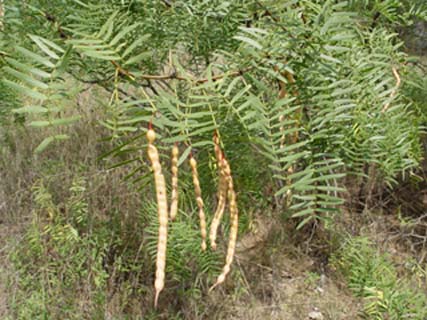
Mesquite (Prosopis spp.)
The Mesquite tree has been historically one of the most important plants for the peoples of the Sonoran desert. Here is how various parts of the tree are used.
1) Pods- the mesquite pods are picked during the summer and early fall and they are then crushed to make a type of "flour" which has a sweet fragrant flavor and is consumed traditionally in the form of simple cakes. More recently gourmet bakeries in the Southwestern United States have started using mesquite meal in all types of baked goods from cookies to cakes. Medicinally the pods are boiled and applied to eyes when afflicted by conjunctivitis in the form of a wash.
2) Leaves: The leaves of the mesquite tree are boiled and drank as a tea in order to alleviate diarrhea and an upset stomach
3) Leaves and Twigs: These are boiled and applied to minor abrasions and scrapes
4) Mesquite Wood: The wood of the mesquite is used during grilling in order to add a flavorful smoked taste to any meat.
 Photo Acquired From: http://www.nps.gov/tuma/naturescience/images/3C_honey_mesquite_pods.jpg
Padiush Nuiknew
1) Pods- the mesquite pods are picked during the summer and early fall and they are then crushed to make a type of "flour" which has a sweet fragrant flavor and is consumed traditionally in the form of simple cakes. More recently gourmet bakeries in the Southwestern United States have started using mesquite meal in all types of baked goods from cookies to cakes. Medicinally the pods are boiled and applied to eyes when afflicted by conjunctivitis in the form of a wash.
2) Leaves: The leaves of the mesquite tree are boiled and drank as a tea in order to alleviate diarrhea and an upset stomach
3) Leaves and Twigs: These are boiled and applied to minor abrasions and scrapes
4) Mesquite Wood: The wood of the mesquite is used during grilling in order to add a flavorful smoked taste to any meat.
Padiush Nuiknew
Monday, August 8, 2011
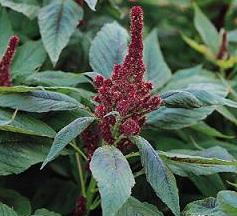
Amaranth (Amaranthus cruentus)
Amaranth known as huatli or alegria is a grain producing herb native to an area that extends from the Southwestern United States to South America.
Amaranth has been cultivated since about 4,000 BCE (BC) and was an important food crop to the Mayan, Nahuan and Inca peoples. The use of amaranth as a staple crop fell considerably after the arrival of the Europeans but today it is growing in popularity once again.
Both the herb and the amaranth grain are nutritious. The herb can be prepared in any way other leafy greens are (ex. spinach, collard greens etc.) that are used in salads, steamed, stirfried etc. and is quite delicious. The grain is one of the grains with the highest content of protein and other nutrients known to humans and can be prepared in various ways. Traditionally amaranth is prepared by our peoples boiled or in the famous "Alegrias" of toasted amaranth. In essence amaranth can be prepared just like any other side dish grain as a substitute for rice for example.
 Photo acquired from: http://www.seedman.com/image/2577.jpg
Ashta Nemana Nuiknew
Amaranth has been cultivated since about 4,000 BCE (BC) and was an important food crop to the Mayan, Nahuan and Inca peoples. The use of amaranth as a staple crop fell considerably after the arrival of the Europeans but today it is growing in popularity once again.
Both the herb and the amaranth grain are nutritious. The herb can be prepared in any way other leafy greens are (ex. spinach, collard greens etc.) that are used in salads, steamed, stirfried etc. and is quite delicious. The grain is one of the grains with the highest content of protein and other nutrients known to humans and can be prepared in various ways. Traditionally amaranth is prepared by our peoples boiled or in the famous "Alegrias" of toasted amaranth. In essence amaranth can be prepared just like any other side dish grain as a substitute for rice for example.
Ashta Nemana Nuiknew
Graduation! July 9th 2011
With great pleasure and satisfaction I announce the fact that I graduated! from medical school on July 9th 2011 accompanied by my significant other and my friends and family. It has been a long 4 years of arduous work and great sacrifice.
Nevertheless I am so grateful for the knowledge I gained, the friends I made and the people whose lives I helped touch during my clinical shifts.
Now I am in the transition period between graduation and finally opening the clinic I have always dreamed of!
I would also like to extend my gratitude to the growing number of people around the world who take the time out of their busy lives to read the Talticpac blog and I promise that as has been done since over one year ago now informative and insightful content will continue to be posted on this blog for everyone to enjoy.
Many blessings to you all,
I hope you continue reading this blog!
Ashta Nemanha Nuiknew!!
Nevertheless I am so grateful for the knowledge I gained, the friends I made and the people whose lives I helped touch during my clinical shifts.
Now I am in the transition period between graduation and finally opening the clinic I have always dreamed of!
I would also like to extend my gratitude to the growing number of people around the world who take the time out of their busy lives to read the Talticpac blog and I promise that as has been done since over one year ago now informative and insightful content will continue to be posted on this blog for everyone to enjoy.
Many blessings to you all,
I hope you continue reading this blog!
Ashta Nemanha Nuiknew!!
Tuesday, July 5, 2011
White Zapote (Casimiroa edulis)
White Zapote is a tree with dense branches and fragrant yellow green to white colored flowers. The White Zapote tree's fruit has a yellowish skin with a sweet white pulp. The species is native to Mexico and Central America and the part of the plant used medicinally are the leaves.
An infusion (tea) made out of the leaves of the White Zapote is drank and used to treat high blood pressure and insomnia.
To treat fevers leaves of the White Zapote are added to a hot bath and the person who is sick immerses herself in the bath.
 Photo acquired from:http://luirig.altervista.org/cpm/albums/bot-hawaii06/02786-Casimiroa-edulis.jpg
Ashta Nemana Nuiknew!
An infusion (tea) made out of the leaves of the White Zapote is drank and used to treat high blood pressure and insomnia.
To treat fevers leaves of the White Zapote are added to a hot bath and the person who is sick immerses herself in the bath.

Ashta Nemana Nuiknew!
Saturday, June 18, 2011
Presentations during the Health Fairs Held on April 30th 2011 and May 14 2011 at Esperanza Highschool, Phoenix, Arizona
It was an honor for me to be able to give a presentation on two occasions during health fairs held at Esperanza High School located in Phoenix, Arizona one focused on general health and and women's health. At these two health fairs I had the opportunity to share information about the foods, herbs, and traditional therapies that exist in our communities which are very beneficial for the health of the entire family. I truly enjoyed the fact that the members of the audience asked many questions about the material being presented. Furthermore I also enjoyed the fact that the members in the audience shared with me information about herbs and other traditional medicines that I had not heard about before and its something that I am always willing to learn.
Ashta Nemana Nuiknew
Ashta Nemana Nuiknew
Monday, May 23, 2011
Guava (Psidium guajava)

Guava is a fruit native to Mexico and Central America and northern South America. Guava fruits have a rind that is a flavor reminiscent to lemon but more diffuse. Guava pulp has a sweet or flour flavor depending on the type.
Nutritionally speaking guavas are high in vitamin C, folic acid, and various minerals. Guava is also full of antioxidants and polyphenols.
Medicinally guava has been used a traditional medicine for dealing with diarrhea and other gastrointestinal complaints. Traditionally the leaves of the guava tree are boiled and drank as a tea if the leaves cannot be acquired a person can eat the fruit complete with its rind and receive the medicinal benefits. Furthermore eating the fruit can help prevent the dehydration associated with these complaints.
Ashta Nemana Nuiknew!
Subscribe to:
Posts (Atom)